


In-Home ABA Therapy: A Parent's Guide to Getting Started
Discover how in-home ABA therapy works, what a typical session looks like, and how to get started for your child with autism in a warm, supportive guide.


Some mornings begin with cereal on the floor, a carefully chosen cup rejected, and a meltdown that leaves everyone in the kitchen exhausted before the day has properly started. You may find yourself wondering whether support could come to your family instead of asking your child to adjust to one more unfamiliar place.
That question leads many parents to in-home ABA therapy. The approach brings structured teaching into the routines where communication, independence, transitions, and play already happen. If you're also looking for practical ways to support communication outside sessions, building communication skills in everyday moments can offer useful ideas.
Table of Contents
A Morning That Feels Familiar
The wrong cup is a small problem until it isn't. Your child pushes the blue cup away, reaches for the red one, and then drops to the kitchen floor when you hand over the replacement. You try words, gestures, and a favorite snack. Nothing seems to reach them. Your coffee cools beside the sink while you calculate how many transitions remain before bedtime.
A therapist sitting at the table might practice requesting, waiting, or tolerating a change. But at home, those skills meet the pressure of breakfast. The cup matters because your child wants a drink, not because someone selected it for a practice exercise. The therapist can observe what happens before the distress, help you offer a clearer way to communicate, and reinforce even a small attempt to request help.
A helpful starting point: Home-based support shouldn't make your house feel like a clinic. It should help daily routines become more understandable and manageable.
That doesn't mean every morning becomes easy. Siblings still interrupt, the dog still barks, and some days your child may not be ready to participate. A thoughtful clinician works with those realities rather than treating them as failures. The aim is to identify a useful next step, such as reaching toward a picture, using a gesture, accepting a short pause, or moving through one part of the morning with less support.
After another difficult breakfast, you may sit down with your phone and search for what in-home ABA therapy is. The answer begins with understanding both parts of the phrase, ABA and in-home.
What In-Home ABA Therapy Actually Means
Applied Behavior Analysis, or ABA, is a way of studying how behavior works in context. A practitioner looks at what happens before a behavior, what the child does, and what happens afterward. That information helps the team teach useful skills and adjust the environment so communication and participation become more practical.
The word in-home describes the setting, not a separate kind of therapy. Instead of practicing every skill in a clinic room, the team may work in the kitchen, bedroom, hallway, yard, or community spaces connected to your home. In-home ABA is commonly delivered during everyday routines such as meals, play, and morning transitions, so practice occurs where your child needs the skill most (Calla Therapy's overview of in-home ABA).
Teaching where the skill belongs
Natural Environment Teaching, often called NET, uses daily activities and a child's interests as teaching opportunities. A simple analogy is brushing teeth. Rather than practicing the sequence only at a table with pretend materials, the therapist can teach the routine at the bathroom sink, where the toothbrush, water, mirror, and actual steps are present. Academic guidance describes NET as an evidence-based approach for embedding instruction into routines, play, and real-world settings, with applications for communication, play, and adaptive behavior (National University's explanation of Natural Environment Teaching).
A Board Certified Behavior Analyst, or BCBA, is the clinician who assesses needs, designs the treatment plan, reviews progress, and supervises implementation. A Registered Behavior Technician, or RBT, is a trained therapist who works directly with the child under that supervision. Depending on the program, other trained therapists and caregivers may also participate.
The BCBA doesn't need to be beside your child for every teaching moment to provide clinical oversight. The RBT records what happens during sessions, communicates observations, and follows the plan. The BCBA reviews that information, observes treatment, and changes goals or teaching procedures when the data and family priorities call for it. That team structure gives you a clear answer to an important question: who enters the home, and who is responsible for the clinical direction behind the visit?
What a Typical In-Home Session Looks Like
An in-home session usually starts with a brief caregiver check-in. You might mention that your child slept poorly, refused breakfast, enjoyed a new toy, or struggled with the school bus. Those details help the therapist decide whether to begin with a familiar activity, reduce demands, or prioritize regulation and communication before working on a planned target.
The therapist may prepare materials while your child plays nearby. A visual choice board, favorite toy, snack items, or a simple activity can be placed within reach. The opening minutes often focus on connection and observation rather than immediate demands. The therapist watches what captures your child's attention and uses that information to make participation feel worthwhile.
Targets inside ordinary activities
A session might move through blocks, a snack, handwashing, and a transition to another room. During play, the therapist can create opportunities to request help or choose between toys. At snack, they can practice asking for more, waiting briefly, or cleaning up. During a transition, they can use a visual cue, a countdown, or a first-then statement.
The teaching may look relaxed, but it isn't unplanned. The therapist identifies the skill, offers the level of help your child needs, and gradually works toward more independent responding. Home routines also expose practical barriers that a clinic may not reveal, such as a confusing drawer, a noisy appliance, a sibling entering the room, or a favorite item stored too high.
In-home sessions often last two to three hours, and many programs recommend 10 to 25 hours per week, depending on the assessment, treatment plan, family schedule, and clinical recommendation. Those figures are common planning ranges, not a promise that every child needs the same amount of therapy.
The quiet data layer
The therapist may record responses on a tablet or tally sheet while continuing to play. They might note whether your child requested independently, needed a gesture, accepted a transition, or completed a step with help. This record helps the team distinguish a difficult day from a pattern that needs a plan change.
The BCBA reviews session data and observations regularly, often as part of weekly supervision and clinical decision-making. At the end of the visit, the therapist should share practical notes with you, including what worked, what was difficult, and one routine you can approach differently for the rest of the day. A useful wrap-up doesn't leave you with a long list. It gives you a manageable next move.
Skills Targeted in Real Home Routines
A home can reveal the difference between performing a skill during therapy and using it when the need appears. The following examples show how a therapist might connect a goal to an ordinary routine without turning the whole day into a lesson.
Communication at the kitchen counter
A child points and grunts when they want juice. The therapist places a picture of juice nearby, pauses before opening the refrigerator, and helps the child exchange the picture. Over time, the prompt may shift toward a spoken word, sign, or another reliable communication method selected with the family and clinical team.
The routine anchor is snack preparation. Success is more than just completing an exchange during a session. It may look like your child approaching the kitchen, selecting the right picture or word, and communicating the request to a parent who wasn't standing in the exact teaching position.
Daily living during breakfast
Getting dressed and clearing a plate contain several smaller actions. A therapist may use backward chaining, teaching the final step first so your child experiences completing the routine. At breakfast, that might mean the adult handles most of the plate-cleanup sequence while the child carries the plate to the counter, then gradually takes on earlier steps as support fades.
The routine anchor is breakfast cleanup and dressing before the day begins. Success could mean pulling on socks with fewer prompts or placing a plate in the agreed location instead of leaving the table immediately. The team watches whether the skill remains useful when the RBT isn't present.
Social play in the living room
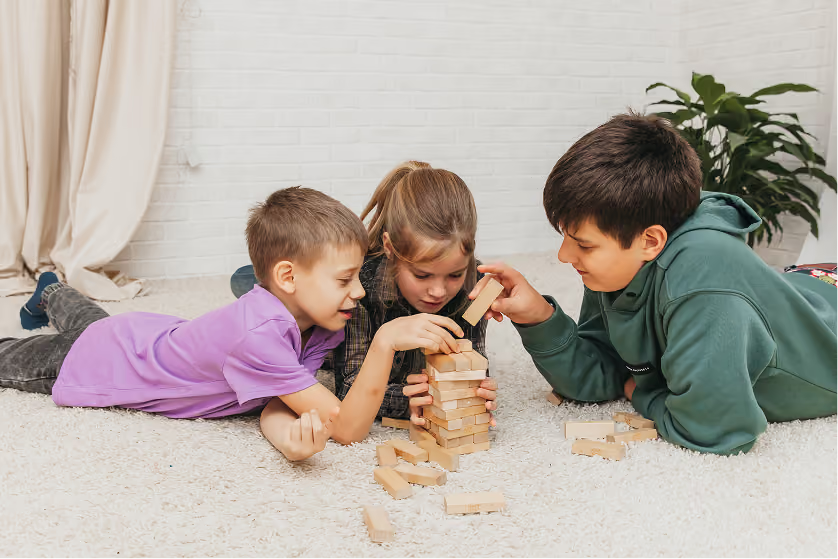
A sibling builds a tower while the therapist positions themselves nearby, not between the children. The therapist creates natural reasons to wait, pass a block, notice what the sibling is doing, and take a turn. If the tower falls, the team can also practice asking for help, coping with disappointment, or trying again.
The routine anchor is shared play. Success might be your child looking toward the sibling, accepting a block from them, or staying with the game for another turn. The interaction doesn't need to look perfect. It needs to become more accessible and meaningful for both children.
This is why naturalistic teaching matters. A home-delivered telehealth ABA study reported that 88.89% of assessed targets generalized to family members when practice occurred in the natural environment (the peer-reviewed home telehealth study). That finding doesn't predict what will happen for every child, but it illustrates the purpose of building skills into real interactions.
Your Role as a Caregiver Between Sessions
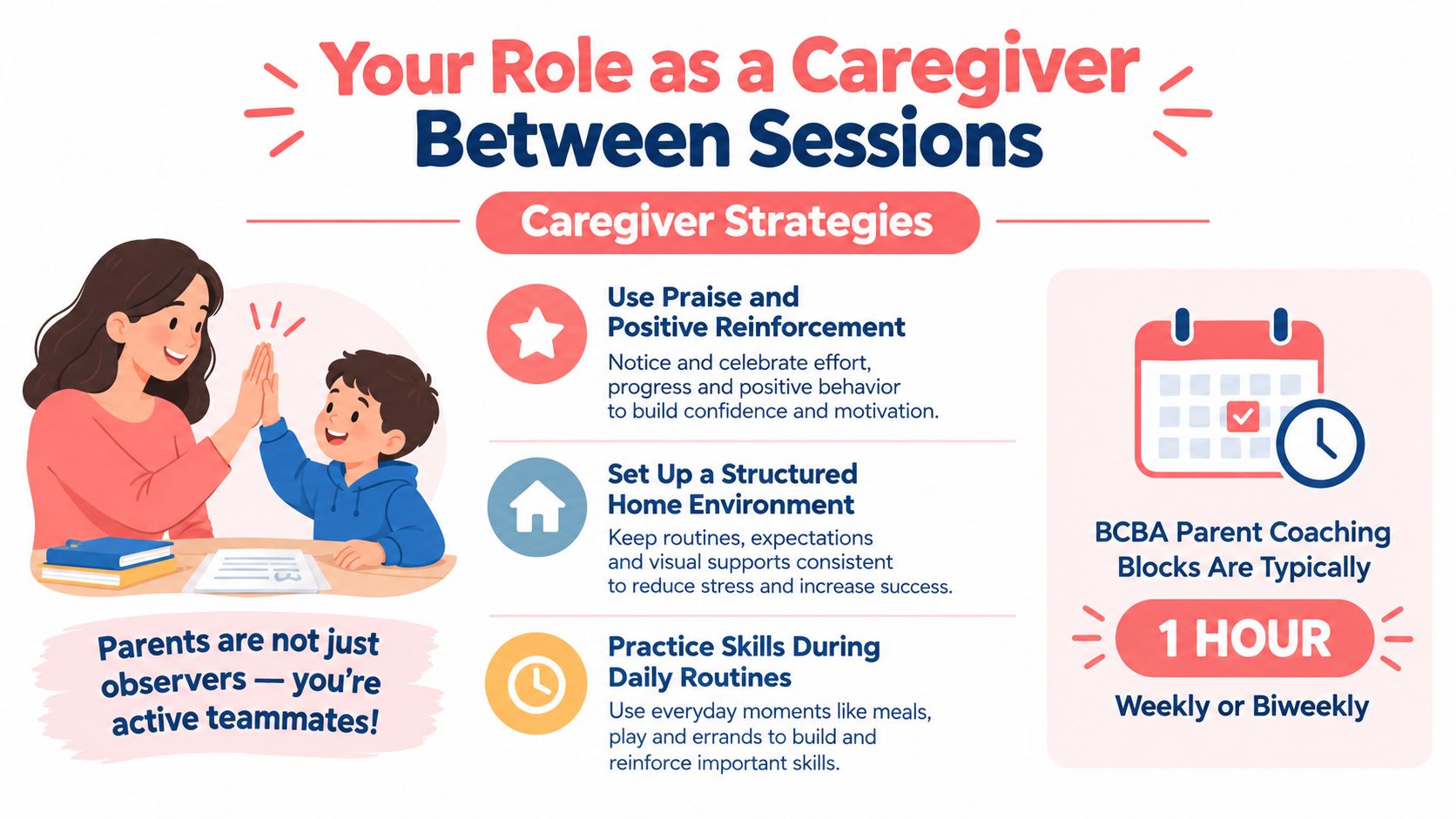
You're not a bystander while the therapist works. You're the person who sees the breakfast refusal, the rushed shoe routine, and the successful request that happens when nobody is taking formal data. Your observations help the BCBA choose goals that matter, and your participation gives your child more chances to use a skill with familiar people.
A BCBA may offer a parent coaching block of 30 to 60 minutes weekly or every other week. That time can focus on one or two routines, such as requesting during snack and tolerating toothbrushing. It should fit alongside work, school runs, and the rest of family life rather than becoming another source of pressure.
Four practical moves
- Narrate your actions: Use short, useful language such as “Open juice,” “Shoes on,” or “Your turn.” This gives your child language connected to the moment without requiring a response every time.
- Pause before helping: Leave a comfortable pause after offering a choice or starting a routine. Your child may need time to process and respond before you step in.
- Match the modeled prompt: Ask the therapist to show you exactly how to prompt, then use the same sequence. Consistency makes it easier to tell whether your child is becoming more independent.
- Record small wins: Add a quick note to your phone when your child initiates, needs less help, or handles a routine differently. Those details make coaching conversations concrete.
Parent training often treats generalization and maintenance as separate outcomes, meaning the team considers both whether a skill transfers to new people or settings and whether it lasts over time. A 2024 scoping review of caregiver training reflects that expectation in the way studies track these outcomes (the caregiver training review).
You may notice coaching is helping when your child needs fewer prompts, initiates the new skill, and you feel calmer rather than more drained during the routine. Those signs don't mean every attempt will go smoothly. They suggest the plan is becoming workable for your family.
This short video can also help reinforce the idea of practicing skills through ordinary routines:
For families who want structured guidance between visits, FriendlyABA's parent coaching service focuses on applying strategies during daily routines.
In-Home, Clinic, and Hybrid Compared Honestly
No setting wins for every child or family. The better question is whether the format supports the goals you care about and can continue reliably through changing schedules, transportation challenges, staffing limits, and your child's comfort.
In-home ABA offers direct access to the routines where skills must work. It can reduce travel and create frequent caregiver coaching opportunities, but siblings, pets, toys, and doorbells can compete for attention. It may also provide fewer spontaneous peer models unless the program deliberately includes siblings, community activities, school coordination, or another social setting.
Clinic-based ABA can offer a more controlled environment, specialized materials, peer exposure, and a schedule designed around concentrated treatment. The trade-off is the commute and the possibility that a skill practiced in the clinic needs additional support before it appears at home, school, or the grocery store.
Hybrid and telehealth-supported care can make BCBA supervision and parent coaching more accessible when travel or clinician supply is a problem. Some children find screens tiring, and hands-on in-person support may be important for physical prompting or complex routines. A 2026 industry analysis reported that half of U.S. counties have no BCBA and identified telehealth and hybrid parent coaching as ways to reduce geographic barriers (the industry analysis of BCBA access and telehealth).
| Factor | In-Home | Clinic-Based | Hybrid / Telehealth |
|---|---|---|---|
| Generalization | Skills are practiced in familiar routines | Skills begin in a structured setting | Practice can combine home routines with remote coaching |
| Family participation | Caregivers can join the actual routine | Participation depends on travel and clinic arrangements | Coaching can happen without every visit being in person |
| Peer exposure | May require planned sibling or community practice | Peer interaction may be easier to arrange | Depends on the in-person and remote components |
| Travel | The team comes to the home | The family travels to the clinic | Can reduce travel for supervision and coaching |
| Distractions | Home noise, pets, and siblings may interrupt | The setting may be more controlled | Screens may create fatigue for some children |
| Continuity | Depends on local staffing and scheduling | Depends on clinic capacity and commute | Can extend access where local BCBA availability is limited |
Ask yourself: Which format can keep therapy going consistently for the next six months given our schedule, transportation, and insurance setup? A sustainable plan may create more value than a theoretically ideal schedule that your family can't maintain.
How to Get Started Step by Step
Starting can feel like a pile of phone calls and unfamiliar paperwork. Breaking it into stages makes the process easier to manage, and you don't need to solve every clinical question before the first conversation.
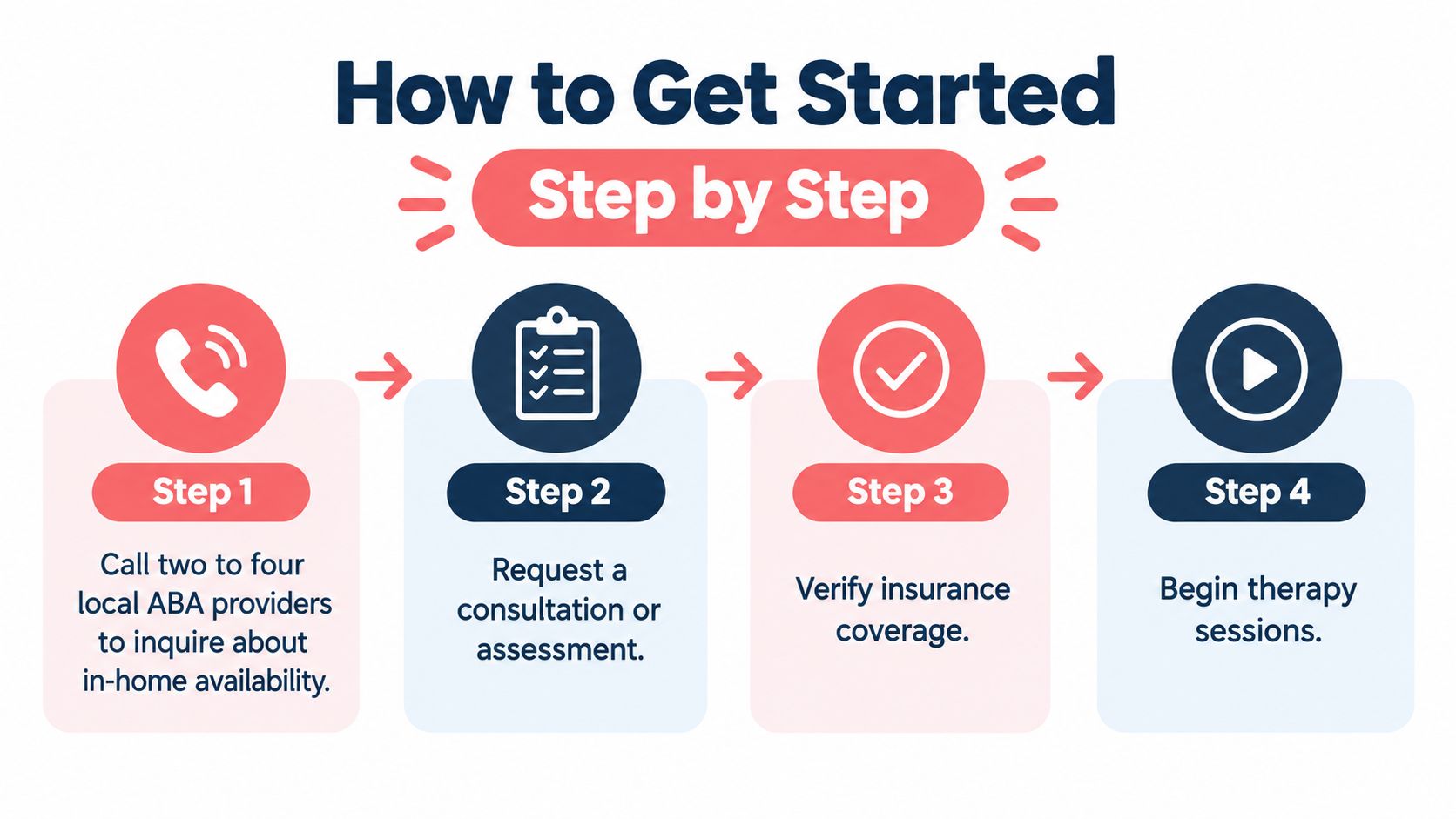
Call two to four local providers. Ask whether they offer in-home ABA in your area, how their waitlist works, which insurance plans they accept, and whether they have openings for your child's age and needs. Write the answers in one document so you can compare them.
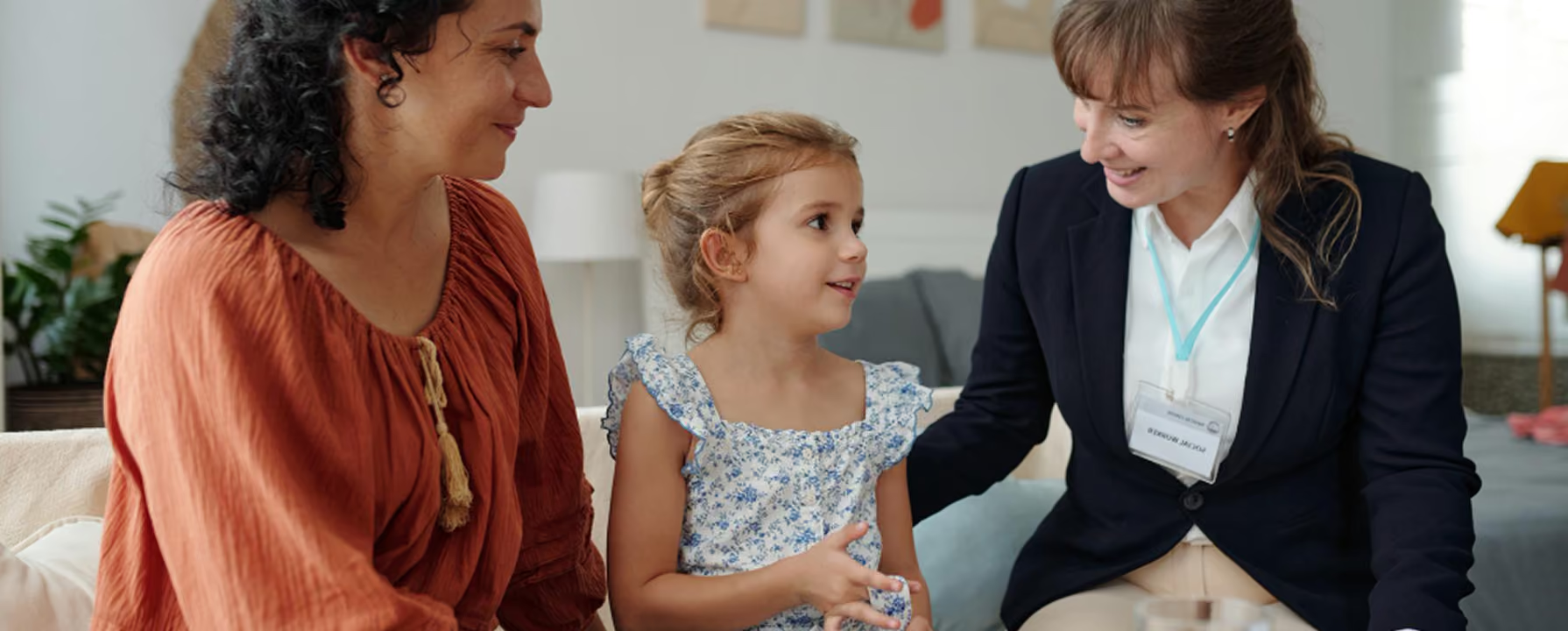
Request a consultation. Use the conversation to share your priorities, such as communication at meals, safer transitions, dressing, play, or school participation. A consultation should also give you space to ask how caregivers participate and how progress is reviewed.
Complete insurance verification. The provider can help explain coverage, documentation, and authorization requirements. Many plans require a formal autism spectrum disorder diagnosis before ABA authorization, so diagnosis may need to come first if your child hasn't received one.
Schedule the BCBA assessment. Assessment commonly includes interviews, direct observation, and goal-setting across home routines. A BCBA may use tools such as the VB-MAPP or ABLLS alongside caregiver input and developmental history. Assessments often involve two to three home visits, depending on the provider and your child's needs.
Review the treatment plan. Look for clear goals, recommended hours, teaching methods, safety considerations, caregiver coaching, and a process for reviewing data. You should understand what the team will work on and why each target matters to your child.
Meet the RBT team. Ask who will visit, how supervision works, how absences are handled, and how the team communicates with you. A good fit includes respectful interactions with your child and your household.
Begin gradually and communicate early. Many recommendations fall within 10 to 25 hours per week, but the appropriate schedule depends on the assessment and authorization. You can raise concerns, request changes, pause services, or change agencies if the arrangement isn't working for your family.
- What felt easier this month? Consider one routine, interaction, or transition that required less effort.
- What would make next month even better? Choose a small, observable change, such as one clearer request at snack or one additional step in getting dressed.
Before the assessment, you can read what to expect during your first ABA assessment. Bring a short list of routines that feel hardest and moments when your child already shows interest or independence. Those observations often help the BCBA see strengths that a formal task alone might miss.
Small Moments, Big Milestones
Progress may look quiet at first. Your child asks for a snack with a word, picture, sign, or device instead of grabbing. They tolerate a haircut with a little less distress. They join a birthday activity for a short period, then return to you when they need a break.
These moments matter because they show whether a skill can move beyond a single lesson. A child may learn to request with one therapist, but the meaningful change is using that communication with a parent, sibling, teacher, or another trusted adult. In-home ABA makes those everyday transfers visible and gives the team a natural place to practice them.
The path rarely moves in a straight line. Plateaus happen, new environments can unsettle a skill, and a difficult week doesn't erase earlier learning. Parents also sometimes notice a change before a data summary makes the pattern clear, especially when the change appears in an unplanned moment.
Questions to bring to the next meeting
A BCBA can help turn those observations into practical goals and decide whether the current teaching approach needs adjustment. You don't need to arrive with a perfect record or a final decision about the right setting. The first conversation can help you understand your options.
FriendlyABA provides individualized ABA services in home, school, and community settings, with BCBAs and trained therapists working on communication, daily living, play, safety, and caregiver collaboration. If you'd like to discuss whether in-home support fits your child's routines, visit FriendlyABA to book a consultation with no pressure to commit.
Our Latest Insights







You don't have to figure it out alone
Whether you're exploring ABA therapy for the first time or searching for a provider who truly feels like the right fit, we're here to help.