


10 Worksheets for Autistic Children and Families
Explore 10 worksheets for autistic children, from visual schedules to life skills, communication, academics, and social learning resources.

A promising worksheet can still become a frustrating afternoon if it doesn't match your child's communication level, interests, or current goals. You may download a page about emotions when your child is working on requesting help, or print a math activity that looks simple but contains too much visual clutter. That mismatch doesn't mean your child can't learn. It means the material needs better alignment.
Worksheets for autistic children work best as one part of a broader teaching plan. They can support communication, early academics, daily living, social understanding, transitions, and independence, but they shouldn't replace responsive teaching, play, conversation, or practice in real routines. Applied Behavior Analysis, or ABA, is a structured approach that teaches useful skills through individualized practice and reinforcement. A Board Certified Behavior Analyst, or BCBA, can help connect a worksheet to assessment findings, measurable goals, and your family's priorities.
The ten resources below differ in age range, skill focus, customization, cost considerations, preparation, and home or classroom use. Some are ready to print. Others are better for a BCBA, teacher, or caregiver who needs to create highly individualized visual supports. The strongest choice is the one your child can understand, use, and connect to everyday life.
Table of Contents
1. The Autism Helper
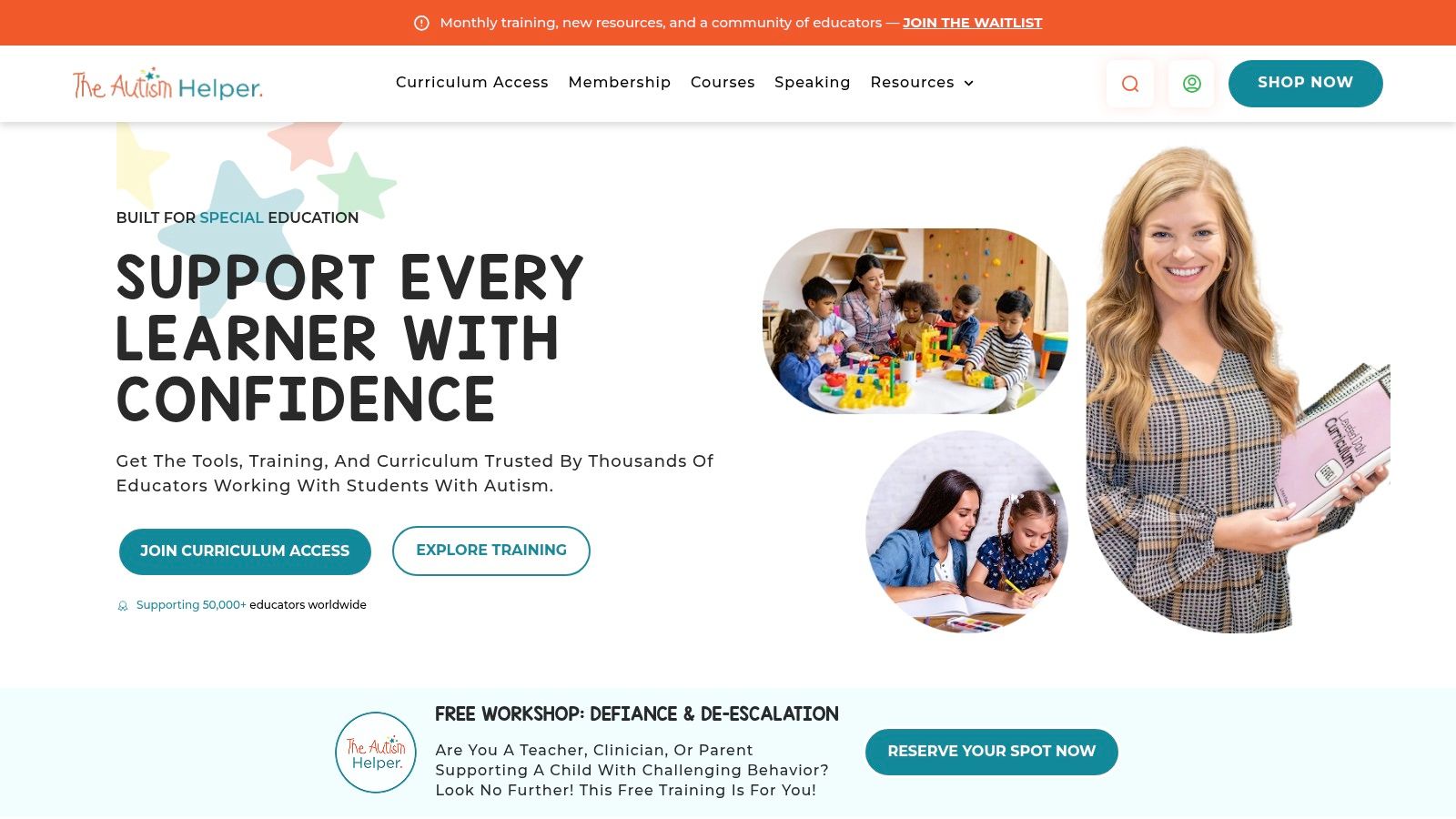
The Autism Helper is a strong starting point for families and educators who want autism-specific materials without building every page from scratch. Led by a BCBA, the publisher offers leveled curriculum resources, printable worksheets, adapted books, task cards, visual supports, data tools, and training materials for home, school, and therapy settings. The catalog reaches beyond academic practice into daily living, behavior supports, communication, and classroom organization.
Best fit and trade-offs
This resource fits a child who benefits from clear formatting, predictable steps, and materials that already reflect common autism-support needs. The leveled approach can help a team adjust difficulty rather than handing every learner the same page. A caregiver might use a visual sequence for getting dressed, while a teacher uses task cards or an adapted book during independent work.
The main advantage is low preparation after selection. Most materials need printing, and some reusable supports work better when laminated or paired with Velcro. That preparation can be worthwhile for schedules and repeated routines, but it may feel like too much for a family seeking a single activity for tonight.
The full Curriculum Access subscription may also be costly for a single classroom or individual family. Review the sample materials first and choose a narrow resource that matches one current goal instead of purchasing a broad collection your child won't use.
Practical rule: Choose the page that supports a skill your child uses today, then connect it to a real routine before adding more materials.
Explore The Autism Helper's autism-specific resources.
2. File Folder Heaven
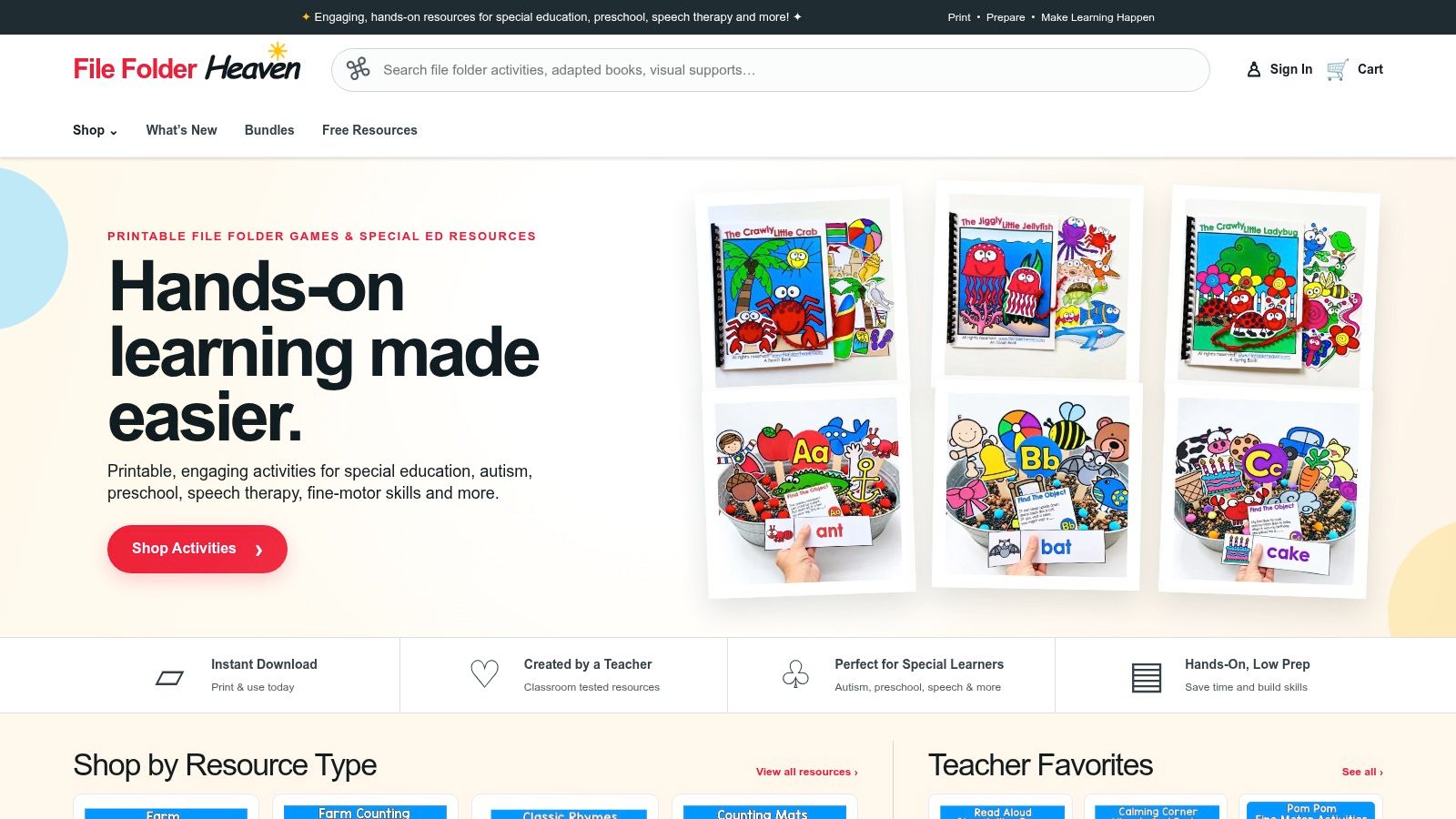
File Folder Heaven is useful when a caregiver or classroom team wants a large supply of themed, printable activities in a consistent format. Its catalog includes adapted books, file-folder tasks, visual schedules, themed worksheet packs, and activities for comprehension, sequencing, fine motor practice, and life skills. Seasonal and holiday themes can make practice feel more familiar, especially for children who engage more readily with preferred topics.
Where it works best
This resource is especially practical for a teacher building a classroom library or a caregiver creating a rotation of short activities. Bundles can reduce the time spent searching for individual pages, and the repeated visual style may make it easier for a child to learn how materials are presented.
The trade-off is choice overload. A large catalog can make it difficult to identify the right level, target, or activity type. Start by naming the skill in plain language, such as “match pictures to objects,” “sequence handwashing,” or “answer who questions,” rather than browsing by theme alone.
Most resources are printable PDFs, so they don't offer the same level of digital interactivity or automatic data collection as a specialized platform. Plan for printing, cutting, and possibly laminating file-folder pieces. For home use, store only the current activity in an accessible folder so the resource doesn't become another overwhelming pile.
A BCBA or teacher can also help decide whether a themed activity is teaching the target skill or just adding decoration. A favorite character can increase interest, but the page still needs a clear response requirement and an appropriate prompt.
Visit File Folder Heaven to review its printable adapted activities.
3. Do2Learn
Do2Learn is one of the most useful free options for families who need to try a visual support before spending money. The site provides printable picture cards, visual schedules, caregiver and teacher handouts, social and behavior supports, and worksheets covering areas such as fine motor development, literacy, math, and organization.
Its greatest strength is speed. A caregiver can find a first-then support, picture choice board, or simple schedule and test whether a visual format helps during a routine. That makes it a sensible resource for families who are new to visual supports or are waiting to discuss a material with their child's therapy team.
What to expect before printing
The site has an older design, and navigation can take patience. Search terms may not always match the words a parent uses, so try practical phrases related to the routine, such as “toileting,” “clean up,” “feelings,” or “classroom schedule.” The library is broad, but it has fewer complete, ready-made curriculum units than paid providers.
Do2Learn materials are often best as building blocks. A caregiver might print a picture card for “break,” then pair it with a home routine and teach the child how to hand it over or point to it. The card alone won't teach the communication response unless an adult models it, offers an opportunity, and responds consistently.
Review every page for language, image clarity, and developmental fit. Some children need photographs, while others respond better to simple line drawings or symbols. If a page is too busy, cover unused choices or present only the part your child is ready to use.
Find free printable supports at Do2Learn.
4. Twinkl USA
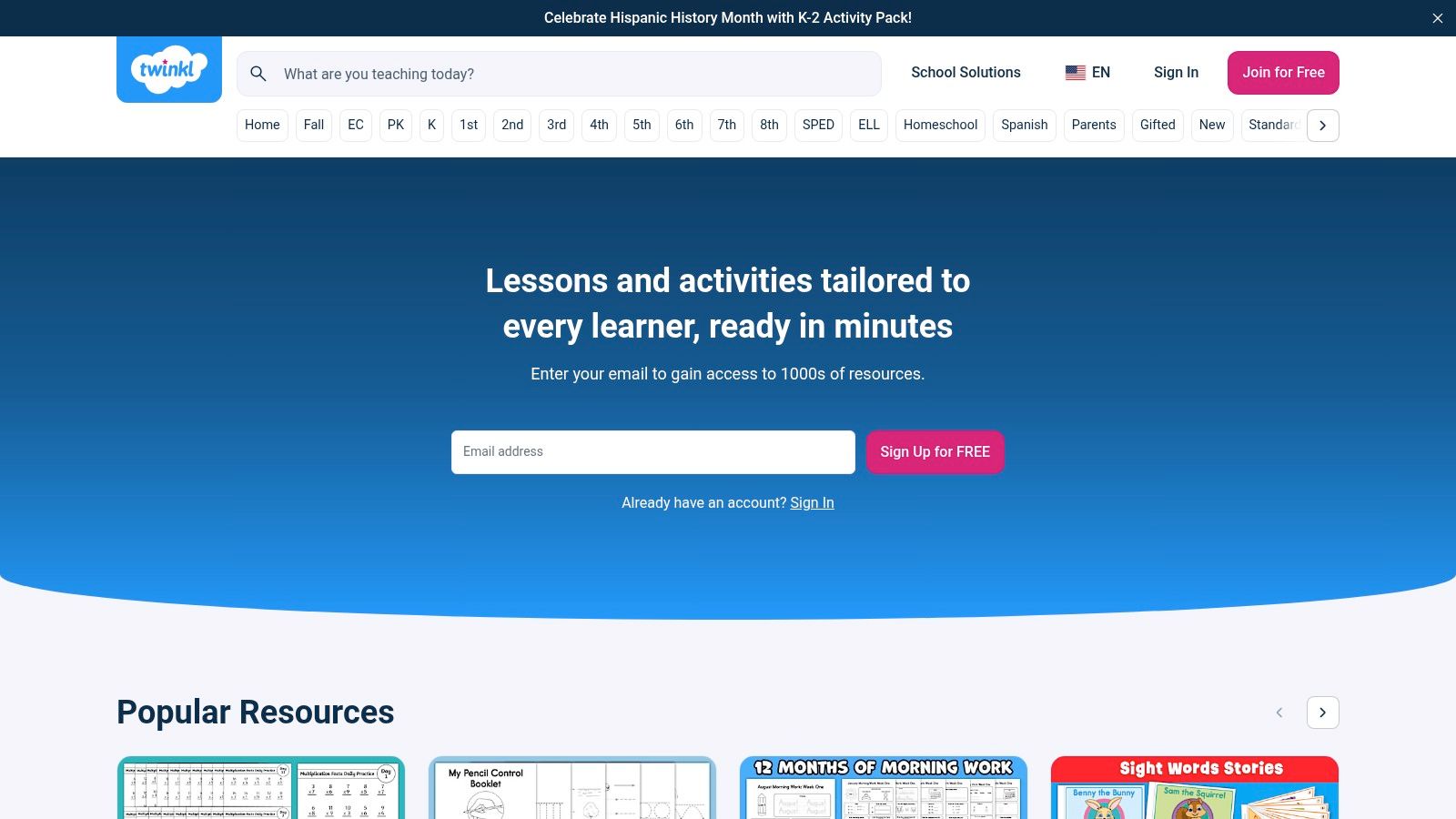
Twinkl USA offers a large K–12 library with a dedicated special education and autism collection. Families and school teams can find printable worksheets, social narratives, visual supports, token boards, task cards, and editable templates. U.S.-specific curriculum resources can help teachers connect an adapted activity to classroom instruction rather than treating autism support as separate from academic participation.
A flexible option for teams
The editable PowerPoint and Google formats are useful when a child needs a different reading level, fewer choices, a familiar interest, or a photograph from home. A teacher might change a generic transition page into a classroom-specific sequence, while a caregiver adapts a social narrative to reflect the actual route to the grocery store.
That flexibility also creates responsibility. Resource quality can vary across creators, so preview each page for visual density, respectful language, and a clear learning purpose. The subscription paywall means families should check current access and pricing before planning a full program around the library.
A worksheet can support a parent's own goal-setting process, but it shouldn't create goals by itself. Begin with the skill that matters in daily life. If the goal is tolerating a transition, a visual sequence and practice routine may be more helpful than a page asking a child to identify an abstract feeling.
Twinkl is a good fit for caregivers or educators who are comfortable editing materials. It is less suitable when you need a fully individualized program without time for review and modification.
Browse Twinkl USA's special education resources.
5. Boardmaker 7 from Tobii Dynavox
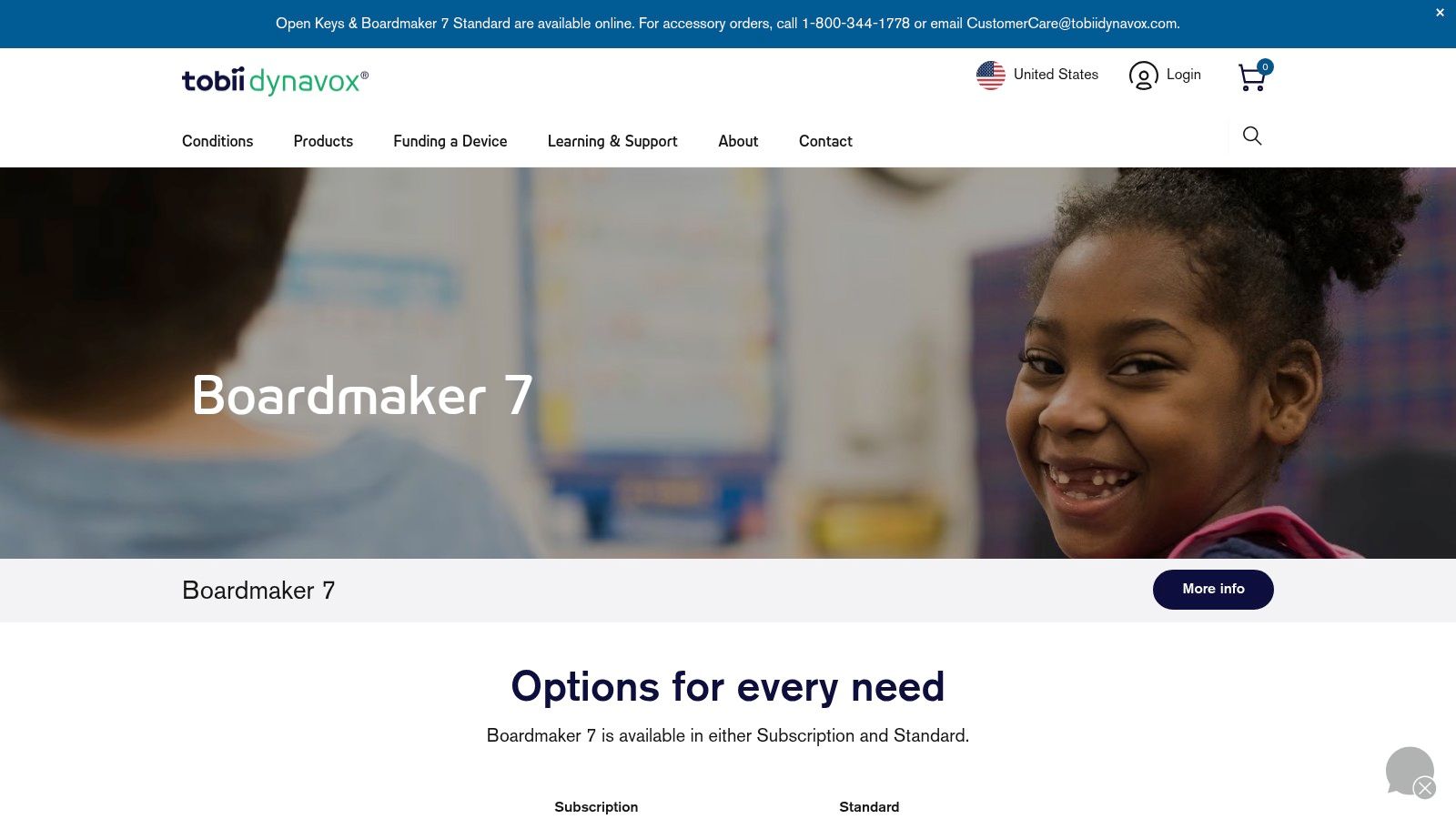
Boardmaker 7 is designed for users who need individualized symbol-supported materials rather than general printable worksheets. It can be used to create and print worksheets, visual schedules, communication boards, social stories, task analyses, and other supports. The shared community library adds ready-made activities, while the Student Center app supports assigned activities that can be played or printed.
Best for communication and precise customization
Boardmaker makes the most sense when a child relies on symbols, needs consistent visual language across settings, or has a communication program that requires coordinated materials. A BCBA, speech-language pathologist, or teacher can create a sequence using the same symbols the child sees on a communication board or schedule.
The major trade-off is complexity. New users need time to learn the software, and the cost is higher than a simple printable marketplace. Families may get more value when a professional already uses Boardmaker and can help create materials that fit the child's communication system.
A worksheet should never become a substitute for access to communication. A child who uses symbols to request a break, help, or preferred activity needs opportunities to use those symbols in real interactions. The page can rehearse the response, but the adult still needs to honor the communication when it occurs.
For families thinking about supporting better communication, Boardmaker may be worth considering when symbol consistency is a central goal. It is less practical for a one-time academic worksheet.
See the current Boardmaker 7 options from Tobii Dynavox.
6. LessonPix
LessonPix is a practical choice for people who need to make individualized worksheets and visuals quickly. The platform supports custom picture-supported worksheets, choice boards, social narratives, schedules, token systems, and data sheets. It also includes templates for schedules, Bingo, lotto, spinners, and other activities, with exports for Word, PowerPoint, and Google Slides.
LessonPix lists more than 50,000 symbols in its library, as described on the LessonPix platform. That breadth can help a caregiver represent a child's foods, toys, routines, people, and preferred activities more specifically than a generic worksheet allows.
Why customization matters
LessonPix works well for a child who understands pictures but needs materials adapted to the home environment. For example, a caregiver can build a bedtime sequence using the actual steps and choices that matter in that household. A teacher can create a first-then board for a classroom transition, while a BCBA can add a simple data sheet for practice opportunities.
The platform is more of a creation tool than a complete autism curriculum. Families who want fully written units may need to do more planning themselves. Symbol styles can also look different from Boardmaker or PCS symbols, so consistency matters if a child already uses another symbol system.
The active sharing center can provide a starting point, but preview shared materials before using them. Remove unnecessary choices, simplify language, and check whether the response matches your child's motor and communication abilities.
7. Super Duper Digital Library
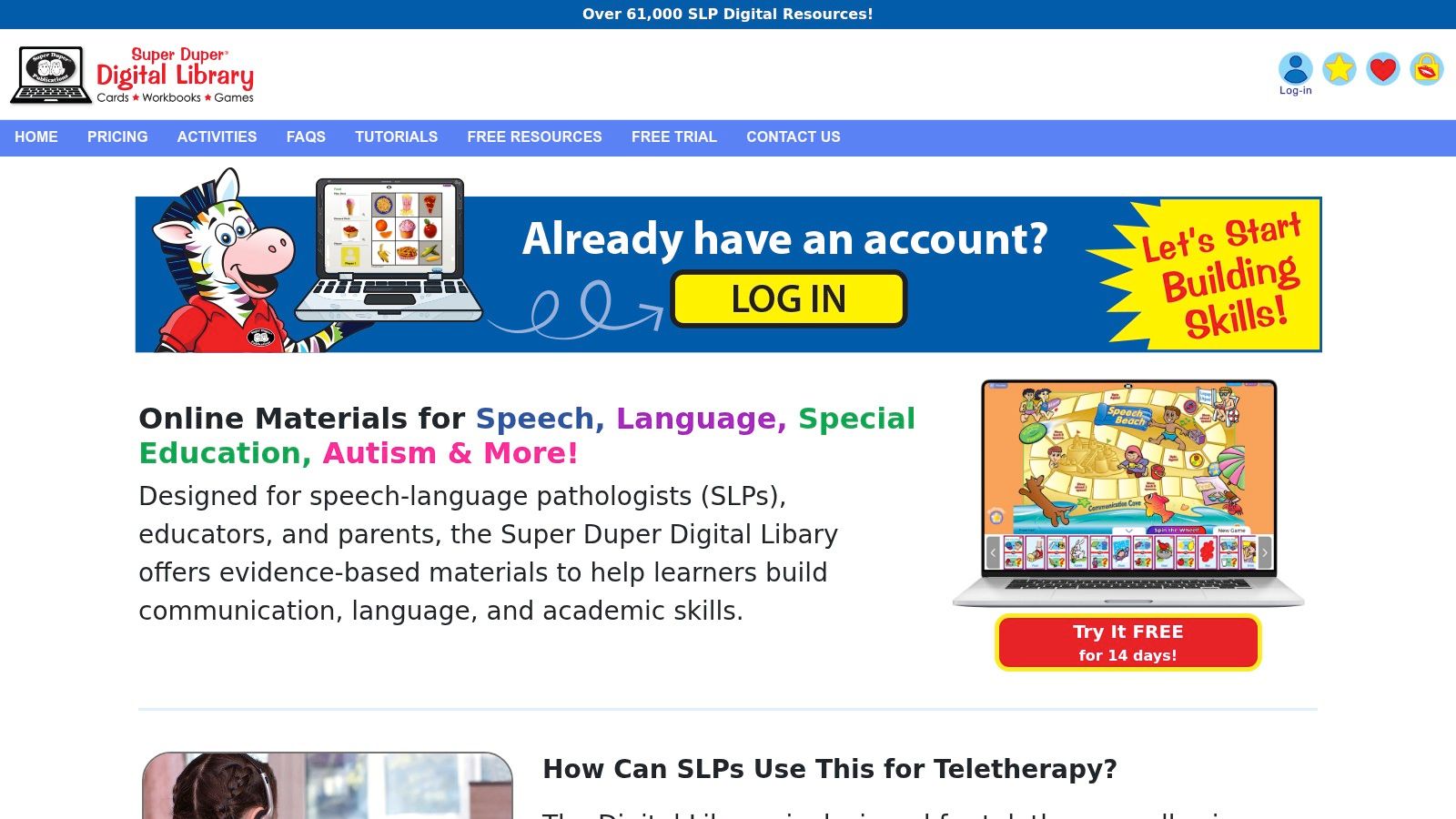
Super Duper Digital Library is a subscription resource for printable worksheets, cards, and games focused on language, articulation, pragmatics, social communication, and early academics. It isn't autism-exclusive, which is both its strength and its limitation. The library can support a speech or language target, but a caregiver or ABA professional may need to adapt the activity for prompting, reinforcement, and data collection.
A strong language supplement
This library fits children working on naming, describing, answering questions, conversation, social problem-solving, or early academic language. A BCBA might use a card set to practice requesting and commenting, while a speech-language pathologist may select material that supports articulation or receptive language.
The library contains thousands of printable worksheets and cards, and it offers a 14-day free trial, according to Super Duper Publications' digital library. Families should use the trial to test whether the search tools and content match their child's current goals before choosing an ongoing subscription.
The pages may need adjustment for children who don't read, use alternative communication, or have difficulty responding to open-ended prompts. Add pictures, model the expected response, reduce the number of items, or turn a worksheet into a short interactive game. Avoid using a social communication page as a test of whether a child can perform a particular social style. The useful question is whether the activity supports participation, understanding, and flexible communication.
8. Attainment Company
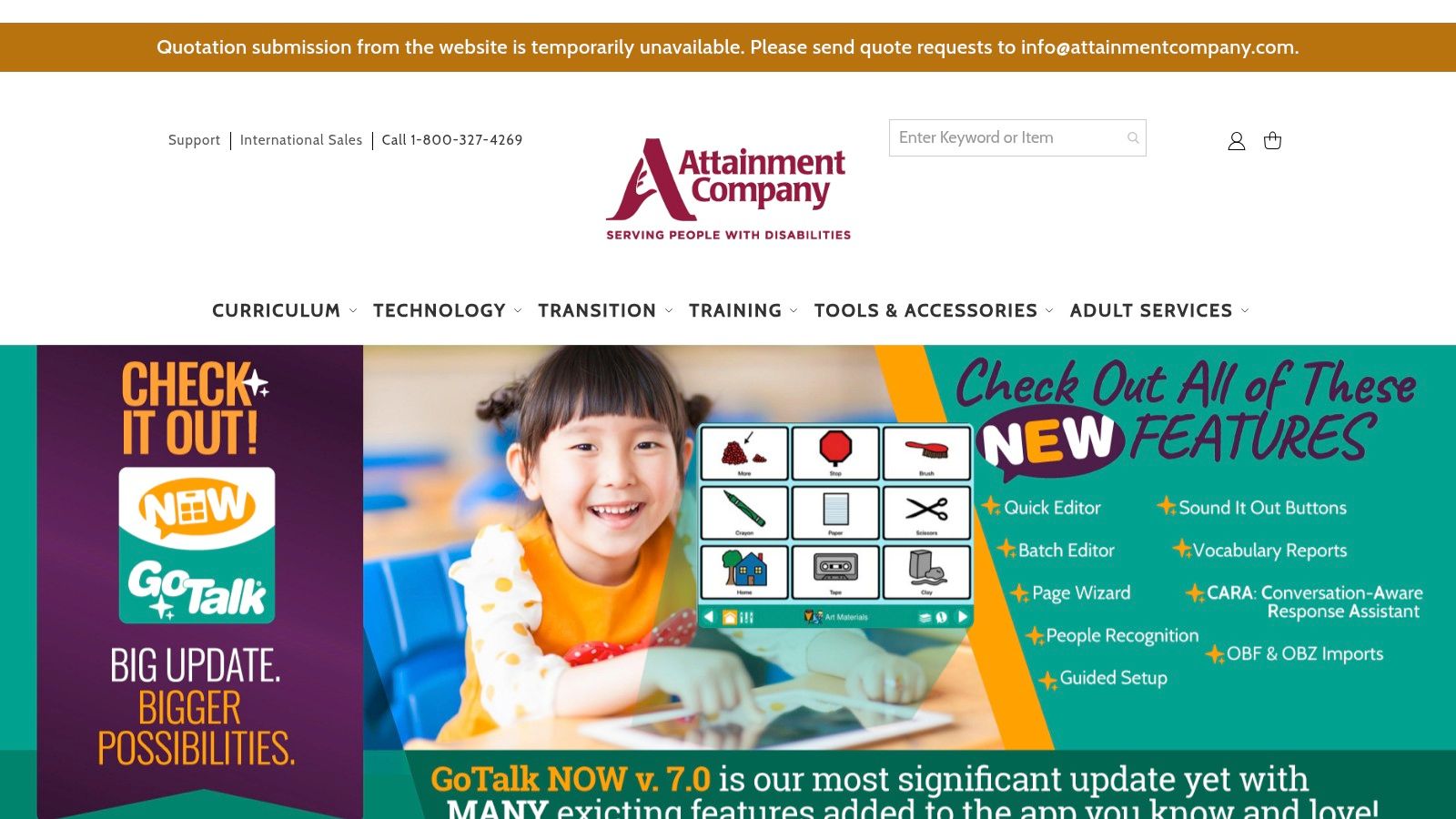
Attainment Company is a curriculum-focused publisher for special education, including students with intellectual disability and autism. Its materials include student workbooks, reproducible worksheets, adapted books, life-skills programs, early literacy and numeracy activities, transition resources, teacher guides, and data sheets.
A good match for independence goals
Attainment is strongest when the goal is functional academics or independence, not just keeping a child occupied. Materials can support practical tasks such as following a sequence, recognizing useful information, completing classroom work, or preparing for greater participation in home, school, and community routines.
The school-ready kits offer more than one-off PDF downloads, but that also affects budget and preparation. Pricing varies by kit, and the materials may make more sense for a school, clinic, or therapy program than for a family seeking occasional practice.
Parents can use the publisher's focus to ask a useful question: What will this worksheet help my child do outside the page? A worksheet about money is more meaningful when followed by practice choosing an item in a store. A sequencing page about hygiene is stronger when an adult uses the same sequence during the actual routine.
For families discussing functional targets with a school team, resources about daily living skills in IEP goals may help frame the conversation. The worksheet should reinforce the goal, not become the goal itself.
Review Attainment Company's special education materials.
9. Autism Classroom
Autism Classroom offers practical classroom-facing materials created by a veteran autism classroom teacher. The collection includes printable social skills and behavior worksheets, center activities, visual supports, classroom setup resources, and free sampler downloads. Its tone is direct and usable, which can help caregivers who want an activity they can understand without extensive training.
Useful for home practice too
The resource fits families working on social understanding, behavior expectations, classroom routines, and independent center work. Low-cost workbooks can be easier to use at home than a large curriculum system, especially when a caregiver wants to preview a sampler before buying.
The catalog is smaller than the largest marketplaces, and many materials remain PDF printables with limited interactivity. That isn't necessarily a problem. A simple page may be more accessible than a complex digital activity if the child needs a clear visual prompt and a predictable response.
Use behavior worksheets carefully. A page about “expected behavior” should help a child understand what to do, how to request support, and what choices are available. It shouldn't be used to shame a child for communicating distress or to demand compliance without considering sensory, communication, or environmental factors.
Pair the worksheet with observation. If a child refuses a page, note whether the task is too difficult, the language is unclear, the room is noisy, or the reinforcement isn't meaningful. A BCBA can help identify the likely barrier and adjust the teaching plan.
Try the free materials and classroom resources at Autism Classroom.
10. n2y Unique Learning System
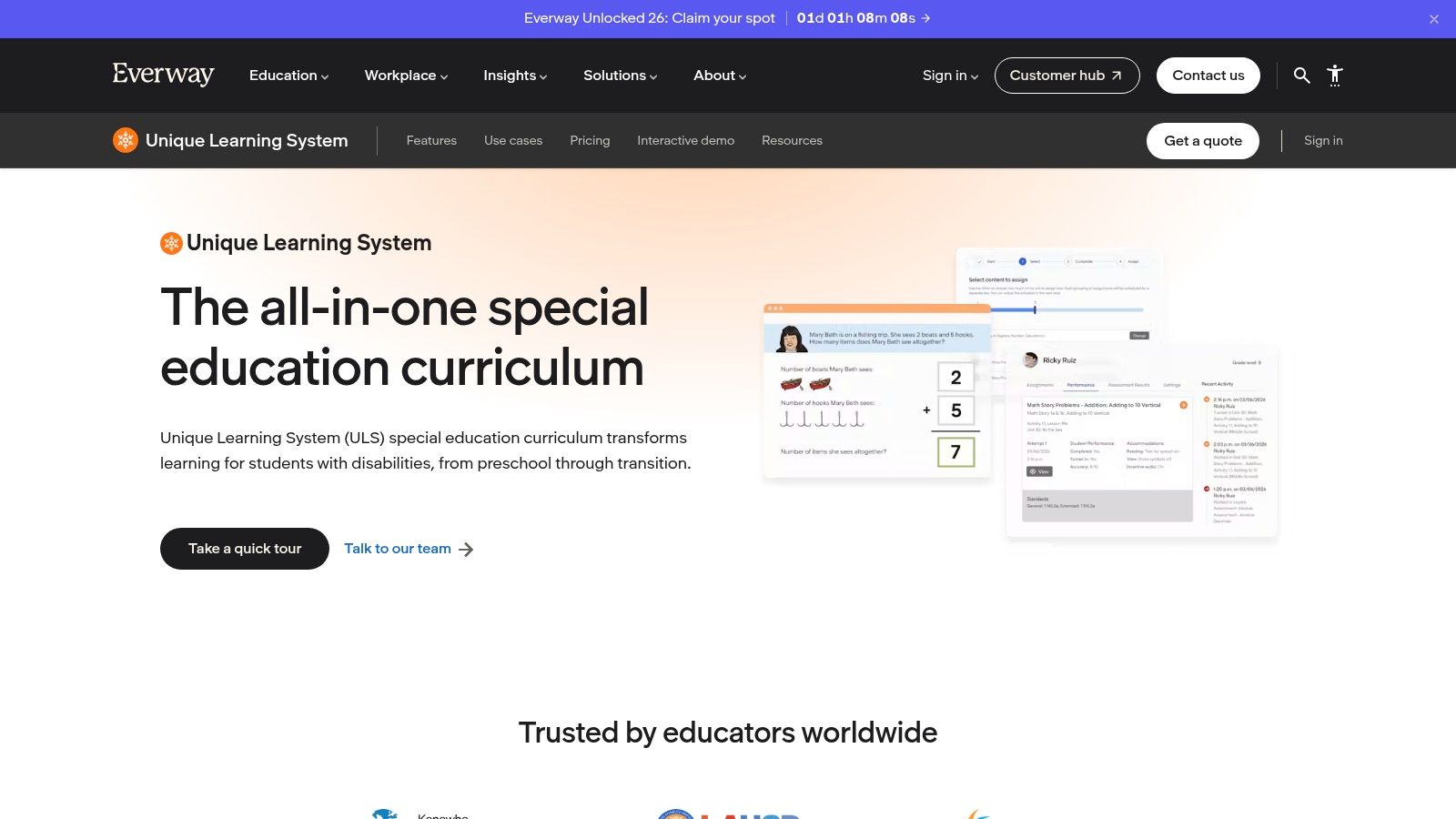
n2y Unique Learning System, now part of Everway, is a complete special education curriculum with differentiated monthly units and printable, symbol-supported worksheets. Its scope includes English language arts, math, science, social studies, and life skills. The system also includes assessments, data tracking, teacher resources, professional learning, and SymbolStix supports.
Best for coordinated school programming
ULS is designed for teams that need consistent curriculum planning across students with different learning levels. Leveled materials can help a teacher address a shared topic while adjusting reading demands, response formats, and independence expectations. The monthly structure also reduces the planning burden for classrooms serving a wide range of goals.
For an individual family, access may be less straightforward because subscriptions are commonly arranged through a school or district. The interface and training requirements can also be more than a caregiver needs for a short home activity.
The best use is coordinated implementation. A teacher may introduce a topic, a classroom assistant may provide the adapted worksheet, and a caregiver may practice one related life-skill activity at home. The same symbols and vocabulary can make the skill easier to recognize across settings.
A worksheet still needs active teaching. Research on autism education has identified evidence-based practices such as visual supports, graphic organizers, adapted texts, task analysis, and direct instruction. The National Professional Development Center's 2014 review identified 27 evidence-based practices, and a later 2020 review expanded the list to 28 practices for individuals with autism ages 0 to 21 in its autism evidence resources. ULS can support those practices, but the adult's modeling, prompting, feedback, and generalization plan determine how the material is used.
Learn more about n2y Unique Learning System.
Top 10 Autism Worksheet Resources, Comparison
| Product | Core features | Quality ★ | Price 💰 | Audience 👥 | Standout ✨/🏆 |
|---|---|---|---|---|---|
| The Autism Helper | Leveled curriculum, printables, visuals, trainings | ★★★★☆ | 💰 Mid–High (curriculum sub) | 👥 BCBAs, teachers, therapists, parents | ✨ Classroom-tested leveled units; 🏆 autism-specific |
| File Folder Heaven | Themed bundles, adapted books, file-folder tasks | ★★★★☆ | 💰 Low–Mid (bundle value) | 👥 Special ed teachers, resource builders | ✨ Massive themed bundles for fast library build |
| Do2Learn | Free visuals, picture cards, schedules, handouts | ★★★☆☆ | 💰 Free | 👥 Parents, teachers, trial users | ✨ Free, ready-to-print supports |
| Twinkl (USA) | K–12 library, editable templates, SEND resources | ★★★★☆ | 💰 Mid (subscription) | 👥 Teachers, schools, SLPs | ✨ US-aligned editable templates; broad scope |
| Boardmaker 7 (Tobii Dynavox) | Symbol software, shared library, Student Center app | ★★★★☆ | 💰 High (software/sub) | 👥 BCBAs, SLPs, special ed professionals | 🏆 Deep symbol set & high customizability |
| LessonPix | Rapid custom visuals/worksheets, 50k+ symbols, exports | ★★★★☆ | 💰 Low–Mid (affordable) | 👥 SLPs, BCBAs, teachers | ✨ Fast customization & easy exports |
| Super Duper Digital Library | Printable language, social, articulation resources | ★★★★☆ | 💰 Mid (best annual) | 👥 SLPs, clinicians, teachers | ✨ Strong for speech & social communication |
| Attainment Company | Research-based curricula, life-skills, workbooks | ★★★★☆ | 💰 Mid–High (kit pricing) | 👥 Schools, districts, special ed teachers | 🏆 Focus on functional academics & independence |
| Autism Classroom | Social skills workbooks, visuals, classroom resources | ★★★★☆ | 💰 Low (affordable, samplers) | 👥 Classroom teachers, parents | ✨ Practical classroom-ready materials |
| n2y Unique Learning System | Monthly leveled units, SymbolStix supports, data | ★★★★☆ | 💰 High (school/district sub) | 👥 Schools, districts, special ed programs | 🏆 Comprehensive scope, sequencing & tracking |
Choose One Small Next Step
The best worksheet isn't the one with the most pages. It's the one that helps your child practice a meaningful skill at the right level, with enough support to participate and enough flexibility to use the skill somewhere else.
Start by identifying one functional skill. You might choose requesting a break, following a handwashing sequence, matching items for a household task, answering a familiar question, transitioning between activities, or taking turns during a preferred game. A broad goal such as “improve behavior” won't tell you which worksheet to choose. A specific goal gives you a practical direction.
Next, match the resource to your child's communication and learning level. A child who doesn't read may need objects, photographs, symbols, gestures, or a modeled response. A child who reads may still need short sentences, large print, reduced visual clutter, or a clear example. A child who can complete a worksheet independently may need a more natural practice opportunity rather than more paper practice.
Preview the pages before presenting them. Look for unnecessary language, too many choices, unclear directions, small images, or responses that don't reflect your child's actual abilities. Gather only the materials you need. If you plan to reuse the page, laminating it or placing it in a page protector can make sense, but don't add preparation that doesn't serve the goal.
Keep the first activity short and place it inside a familiar routine. A worksheet about choosing clothes may work best before getting dressed. A communication page about requesting help can be practiced while opening a preferred container. A transition visual should be used before an actual transition, not only discussed afterward. One clinician-published autism worksheet resource recommends 15 to 20 minutes per day and emphasizes consistency, parent-led practice, reuse, and data tracking in its guidance for autism worksheets. Treat that as a practical example, not a universal prescription. Your child's tolerance, goals, and therapy plan should guide the duration.
Watch what happens. Does your child engage, avoid, guess, communicate, or ask for help? Does the worksheet make the routine clearer, or does it add another demand? Adjust the prompt, reduce the number of responses, change the images, or stop and try a different format when the material isn't accessible.
Generalization deserves deliberate planning. In a systematic review of 38 potentially eligible randomized controlled trials, only 12 studies, or 32%, measured both initial learning and generalization well enough to enter the generalization analysis. Among those studies, 9 showed at least some successful generalization across people, settings, or activities, as described in the review of social communication intervention evidence. The practical message is simple: don't leave the skill on the worksheet. Practice it with another adult, in another room, during a real activity, and eventually in the community when appropriate.
Caregiver coaching can make that process more manageable. Effective coaching includes learning in authentic routines, collaborative goal-setting, demonstration, in-vivo feedback, and reflection, according to guidance on parent coaching in autism intervention. Parent-mediated ABA research has also reported positive effects in five of seven studies examining reductions in problem behavior, while ABA techniques have been found to improve adaptive skills in autistic adolescents in the cited review of parent-mediated ABA coaching. These findings don't promise a particular result for an individual child. They do support the value of coaching that shows caregivers how to use strategies during everyday life.
Bring patterns to your child's BCBA, teacher, speech-language pathologist, occupational therapist, or another qualified professional. Share which prompts helped, where your child became frustrated, and whether the skill appeared outside the worksheet. A telehealth ABA parent-training study found that parents reached a high level of fidelity with naturalistic behavioral strategies, children showed variable communication gains, and families viewed the training favorably, supporting materials that are simple, coached, and routine-based in the parent-training study.
FriendlyABA's approach centers on small moments and big milestones. Its BCBAs and trained therapists use individualized assessment, caregiver collaboration, natural settings, progress monitoring, and ongoing goal adjustment to support communication, independence, social participation, and daily routines. A worksheet may be one small tool inside that process. It becomes more useful when it reflects your child's strengths, interests, communication system, and real priorities.
Choose one page, one routine, and one response to practice this week. Notice what helps your child participate, then bring that information to the people supporting the plan. If you'd like individualized guidance on selecting materials and building practice into home, school, or community routines, you can book a consultation or appointment with FriendlyABA.
FriendlyABA provides individualized ABA therapy, parent coaching, school support, and home-based services that connect printable tools to functional goals and everyday routines. Visit FriendlyABA to discuss a consultation or appointment and find support that fits your child's communication, independence, and social needs.
Our Latest Insights









You don't have to figure it out alone
Whether you're exploring ABA therapy for the first time or searching for a provider who truly feels like the right fit, we're here to help.